CULTURE

EINSTEIN: AN EDGE SYMPOSIUM

Topic: 

  • CULTURE
http://vimeo.com/105810755

The coincidence last spring of Walter Isaacson's Einstein biography (Einstein: His Life and Universe) hitting the #1 spot on the New York Times bestseller list, coupled with the publication of The Endless Universe: Beyond The Big Bang by Paul Steinhardt, the Albert Einstein Professor of Science at Princeton University (coauthored with Neil Turok), created an interesting opportunity.

A SLICE OF SCIFOO

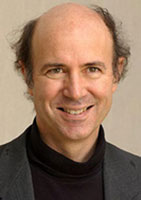
Frank Wilczek
[9.3.07]

SciFoo is a conference like no other. It brings together a mad mix from the worlds of science, technology, and other branches of the ineffable Third Culture at the Google campus in Mountain View. Improvised, loose, massively parallel—it's a happening. If you're not overwhelmed by the rush of ideas then you're not paying attention.

FRANK WILCZEK is considered one of the world's most eminent theoretical physicists. He is known, among other things, for the discovery of asymptotic freedom, the development of quantum chromodynamics, the invention of axions, and the discovery and exploitation of new forms of quantum statistics (anyons). When only 21 years old and a graduate student at Princeton University, in work with David Gross he defined the properties of color gluons, which hold atomic nuclei together.

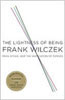
He is the author of Lightness of Being: Mass, Ether, and the Unification of Forces.

Frank Wlczek's Edge Bio Page

Reality Club: Lee Smolin, Betsy Devine, George Dyson

[Photographs by Betsy Devine]


SCIFOO 2007

George Dyson
[8.8.07]

Every year Edge publishes a Summer Postcards edition. For the 2007 edition, here are photos (mine and those of other Edge contributors) from SciFoo Camp—the unclassifiable O'Reilly/Nature/Google meeting of the minds now in its second year. —George Dyson

SCIFOO 2007 
A Photo Essay by George Dyson
Every hour there was at least one session I wished I could have attended, but the one I will single out here is "Give us your Data! Google's effort to archive and distribute the world's scientific datasets" by Noel Gorelick (formerly of NASA and now at Google). For a conference on the future of biology, technology, and science, meeting at Google's global headquarters, this was a rare session that focused explicitly on how Google is changing the landscape. Rather, Google now is the landscape, and the success of SciFoo offers ample demonstration of that.

Many Edge contributors and/or event participants were in attendance, including Larry Brilliant. Sergey Brin, Philip Campbell, Geoff Carr , George Church, Chris DiBona, Carl Djerassi, Eric Drexler , Esther Dyson, Freeman Dyson, Danny Hillis, Steve Jurvetson, Dean Kamen, Vinod Khosla, Jaron Lanier, Oliver Morton, PZ Myers, Tim O'Reilly, Larry Page, David Pescovitz, Stuart Pimm, Martin Rees, Michael Shermer, Clay Shirky, Charles Simonyi, Lee Smolin, Linda Stone, Yossi Vardi, Frank Wilczek, and Anne Wojcicki.

GEORGE DYSON, a historian among futurists, is the author Baidarka; Project Orion; and Darwin Among the Machines.

George Dyson's Edge Bio Page

HERETICAL THOUGHTS ABOUT SCIENCE AND SOCIETY

Freeman Dyson
[8.7.07]


My first heresy says that all the fuss about global warming is grossly exaggerated. Here I am opposing the holy brotherhood of climate model experts and the crowd of deluded citizens who believe the numbers predicted by the computer models. Of course, they say, I have no degree in meteorology and I am therefore not qualified to speak. But I have studied the climate models and I know what they can do. The models solve the equations of fluid dynamics, and they do a very good job of describing the fluid motions of the atmosphere and the oceans. They do a very poor job of describing the clouds, the dust, the chemistry and the biology of fields and farms and forests. They do not begin to describe the real world that we live in. The real world is muddy and messy and full of things that we do not yet understand. It is much easier for a scientist to sit in an air-conditioned building and run computer models, than to put on winter clothes and measure what is really happening outside in the swamps and the clouds. That is why the climate model experts end up believing their own models.


FREEMAN DYSON is professor of physics at the Institute for Advanced Study, in Princeton. His professional interests are in mathematics and astronomy. Among his many books areDisturbing the Universe, Infinite in All Directions Origins of Life, From Eros to Gaia, Imagined Worlds, and The Sun, the Genome, and the Internet. His most recent book, Many Colored Glass: Reflections on the Place of Life in the Universe (Page Barbour Lectures), is being published this month by University of Virgina Press.

Freeman Dyson's Edge Bio Page


THE TECHNIUM AND THE 7TH KINGDOM OF LIFE

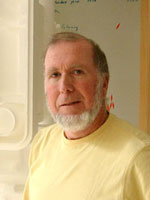
Kevin Kelly
[7.18.07]

What is the meaning of technology in our lives? What place does technology have in the universe? What place does it have in the human condition? And what place should it play in my own personal life? Technology as a whole system, or what I call the technium, seems to be a dominant force in the culture. Indeed at times it seems to be the only force — the only lasting force — in culture. If that's so, then what can we expect from this force, what governs it? Sadly we don't even have a good theory about technology.

KEVIN KELLY is Senior Maverick at Wired magazine and author of the best-selling "New Rules for the New Economy," and the classic book on decentralized emergent systems, "Out of Control." He is currently editor and publisher of the popular Cool Tools, True Film, and Street Use web sites.

Kevin Kelly's Edge Bio Page

REGARDING A NEW HUMANISM

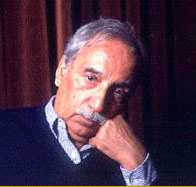
Salvador Pániker
[7.3.07]

The true "sacred texts" of the western tradition have been for centuries, those of the great authors. Plato and Aristotle, Dante and Shakespeare. But also Victoria, Bach, Handel, Beethoven. And Giotto, Fra Angelico, Rembrandt. And Archimedes, Pascal, Newton, Darwin, Einstein, Heisenberg. And Paul Celan and Bela Bartok. Etcetera. All of them are "sacred authors." Canonical. Quantum physics is no less-inspired a monument than the Bible. Nor less ambiguous.

REGARDING A NEW HUMANISM 
By Salvador Pániker
Translation by Karen Phillips

Salvador Pániker is a Spanish philosopher and writer.

Salvador Pániker's Edge Bio Page

FAUST IN COPENHAGEN

Gino Segre
[6.5.07]

The contrast between the two [Bohr & Pauli], the affection felt for both of them, and the affection they felt for each other, is manifest in a skit put on by the young physicists at the April 1932 Copenhagen meeting. That year was the hundredth anniversary of the death of Johann Wolfgang von Goethe, the passing of the man, both humanist and scientist, widely regarded as the last true universal genius. As commemorations marking the occasion took place all over Europe, this small band of physicists at the annual informal gathering decided to have a celebration of their own. It took the form of a sketch, a tongue-in-cheek adaptation to the world of physics of Faust, Goethe's great drama. In the script, written primarily by Delbrück, noble Bohr was identified as the Lord, sardonic Pauli as Mephistopheles, and troubled Ehrenfest as Faust. As in Goethe's version Mephistopheles has the wittiest lines, but that was of course true of Pauli's real-life speech as well.

GINO SEGRE is a professor of Physics and Astronomy at the University of Pennsylvania. He is the author of A Matter of Degrees: What Temperature Reveals About the Past and Future of Our Species, Planet, and Universe, and Faust in Copenhagen: A Struggle for the Soul of Physics.

Gino Segre's Edge Bio Page 

When Only The Enlightened Speak Out, Reason Is Bound To Lose

Andrian Kreye
[6.5.07]

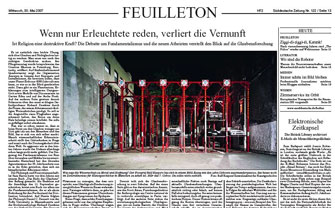
Natural scientists are now daring to study one of the last fields to have eluded them for so long: faith itself. This, of course, threatens faith and philosophy’s hold on the definition of man and his place in the world. This is a main reason why Harris, Dawkins, and Dennett are debated so fervently.

The Third Culture in Süddeutsche Zeitung

WHEN ONLY THE ENLIGHTENED SPEAK OUT, REASON IS BOUND TO LOSE

Is religion a destructive force? The debate over Fundamentalism and the new Atheists overshadows the scientific research on faith.

By Andrian Kreye, Editor, the Feuilleton, Süddeutsche Zeitung

ANDRIAN KREYE, from 1987 to 2006, was the US cultural correspondent for the Süddeutsche Zeitung (currently the largest German-language daily). At the end of 2006, he moved from New York to Germany, where he took over the Feuilleton section of the newspaper (part Arts & Ideas, part Op-Ed section). He is also an Edge contributor.

Andrian Kreye's Edge Bio Page

DON'T KNOW MUCH BIOLOGY

Jerry A. Coyne
[6.5.07]

Whether he knows it or not, Brownback's forthright declarations, denying any possibility that empirical matters of fact might differ from those assumed by his creed, amount to nothing less than a rejection of the whole institution of science. Who is "we", and where did "our" conviction and certainty come from? Would Brownback believe these "spiritual truths" if he hadn't been taught them as a child, or brought up in the United States instead of China?

According to Brownback, we should reject scientific findings if they conflict with our faith, but accept them if they're compatible. But the scientific evidence says that humans are big-brained, highly conscious apes that began evolving on the African savannah four million years ago. Are we supposed to reject this as "atheistic theology" (an oxymoron if there ever was one)?

JERRY COYNE is a professor in the department of ecology and evolution at the University of Chicago, where he works on diverse areas of evolutionary genetics. He is the author (with H. Allen Orr) of Speciation.

Jerry Coyne's Edge Bio Page 

Pages

Subscribe to RSS - CULTURE